Budget Meal Prep: Feeding Two for $50 a Week
How to plan a week of dinners for two on about $50, with a sample menu, the cheapest high-value ingredients, and honest notes on what changes the total.
Disclosure: This page contains affiliate links. As an Amazon Associate we earn from qualifying purchases, at no extra cost to you. Parts of this article were drafted with AI assistance and edited before publishing. Read our disclaimer.
Feeding two people a week of dinners for around $50 is realistic in many U.S. areas if you build meals on beans, eggs, rice, seasonal produce and one or two inexpensive cuts of meat. It isn't a guarantee: grocery prices vary a lot by region and store, so treat $50 as a target and use the method to hit your own number.
Budget meal prep is less about clipping coupons and more about structure. The money leaks in predictable places: half-used ingredients that go bad, too many proteins, impulse snacks and takeout on the night you're too tired to cook. A simple weekly system closes those leaks.
We won't list prices here, because they change by the week and the store. Instead, this guide shows you how to plan to a budget and check your own numbers.
Start with a number and a receipt
Before changing anything, find out what you actually spend. Keep one or two weeks of grocery receipts and add up only the food you used for dinners. Many people are surprised: the problem isn't expensive groceries, it's food that gets thrown out.
Then set a weekly dinner budget. If $50 is the goal for two people, that's about $10 per dinner or $5 per portion across five dinners.
The cheapest ingredients that still feel like dinner
These are usually among the lowest-cost ingredients per serving at most U.S. supermarkets:
- Dried or canned beans and lentils. Filling, high in fiber and protein, and they work in chili, curry, soup and tacos.
- Eggs. Fried rice, frittatas, shakshuka and breakfast-for-dinner.
- Rice, pasta and oats, bought in larger bags.
- Chicken thighs and drumsticks, which usually cost less than breasts and stay juicier when reheated.
- Cabbage, carrots, onions and potatoes. Cheap, filling and they keep for weeks.
- Frozen vegetables, which avoid waste because you use only what you need.
- Canned tomatoes, the base of countless dinners.
Prices for each of these move around, so compare unit prices on the shelf tag (price per pound or per ounce) instead of package prices.
A sample $50-target week for two
This menu reuses ingredients on purpose, so nothing goes to waste. Check your local prices against it.
| Night | Dinner | Shared ingredients |
|---|---|---|
| Monday | Chicken thigh and potato traybake with cabbage | Chicken thighs, potatoes, cabbage, onion |
| Tuesday | Red lentil and carrot soup with toast | Lentils, carrots, onion, bread |
| Wednesday | Veggie egg fried rice | Rice, eggs, frozen peas and carrots, cabbage |
| Thursday | Black bean and rice burrito bowls | Black beans, rice, onion, salsa |
| Friday | Pasta with tomato sauce and white beans | Pasta, canned tomatoes, cannellini beans |
That plan uses one meat, two kinds of beans, one bag of rice and the same onions, carrots and cabbage across several nights. If your total is over budget, swap the chicken for a second bean dish or add eggs to the soup night.
Seven habits that keep the total down
1. Plan around one or two proteins
Buying four proteins for five dinners is expensive and wasteful. Choose one meat and one plant protein, and use each twice.
2. Shop the store brand
Store-brand canned goods, rice, pasta, frozen vegetables and spices are often noticeably cheaper than name brands and fine for cooking.
3. Buy whole and do the chopping yourself
Pre-cut vegetables save time but cost more. On a tight budget, chopping your own is where your prep time pays off.
4. Use the freezer as a pantry
Freeze bread, tortillas, cooked rice and half a pack of chicken. When meat you use often goes on sale, buy extra and freeze it within one to two days of purchase, as FoodSafety.gov recommends for raw poultry and ground meat.
5. Cook dry beans if you have time
Dried beans are typically cheaper per serving than canned. Soak overnight and simmer until tender, or use a pressure cooker. Cooked beans freeze well in portions.
6. Make one "use it up" dinner
Fried rice, frittatas, soups and grain bowls absorb leftover vegetables. Plan one each week and build it around whatever's in the drawer on prep day.
7. Skip the expensive extras
Pre-made sauces, single-use seasoning packets and fancy cheese add up. A few staple spices and a jar of salsa do the same job for less.
Don't let cheap mean unsafe
Stretching food is good. Stretching storage times isn't. Cooked leftovers should be eaten within three to four days in the fridge. If you can't finish something in time, freeze it before day four rather than throwing it out later. That's both safer and cheaper. Our fridge storage guide has the details.
Batch cooking beans and grains
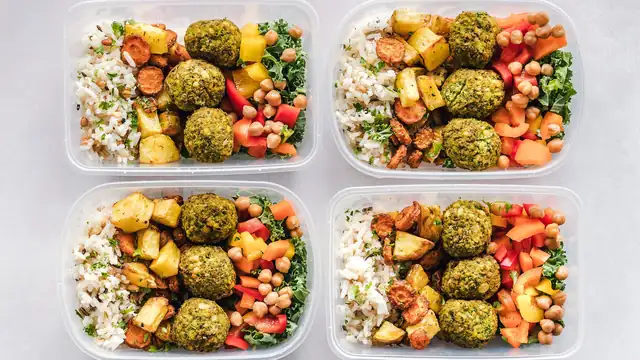
A pot of rice or beans made on Sunday is the backbone of a budget week. A few tips:
- Cool cooked rice quickly. Spread it on a tray, then refrigerate it within two hours. Rice left at room temperature for long periods can grow bacteria whose toxins aren't destroyed by reheating.
- Freeze grains flat in zip-top freezer bags for fast thawing.
- Save bean cooking liquid to thicken soups and chili.
Keep a running note on your phone with the total of each week's receipt and what was thrown out. After a month you'll see which dinners are cheapest, which ingredients go to waste, and how close to $50 your area allows. That data matters more than any generic price list.
What to do with leftovers of leftovers
A tight budget means using every bit. Leftover roasted vegetables can go into a frittata or blended into soup. Stale bread becomes croutons or breadcrumbs. The last spoonfuls of chili top a baked potato or fill a quesadilla. Just keep an eye on the dates: these second-round meals still have to be eaten within the original 3-to-4-day window from when the food was first cooked.
A simple rule helps here: when you put leftovers away, write the original cook date on the label, not the date you repurposed them.
Frequently asked questions
Is $50 a week for two people realistic?
For dinners only, it's possible in many areas with a plant-heavy menu and careful shopping, but prices vary widely by region and store. Use $50 as a target and track your own receipts.
What are the cheapest proteins for meal prep?
Dried and canned beans, lentils, eggs and chicken thighs or drumsticks are usually among the cheapest per serving. Compare unit prices at your store.
Does cooked rice keep for meal prep?
Yes. Refrigerate it within 2 hours of cooking and eat it within 3 to 4 days, or freeze it in portions.